




The thousand-ton order arrived at the port smoothly! 1,000 tons of high-quality rebar successfully delivered to the Moroccan market
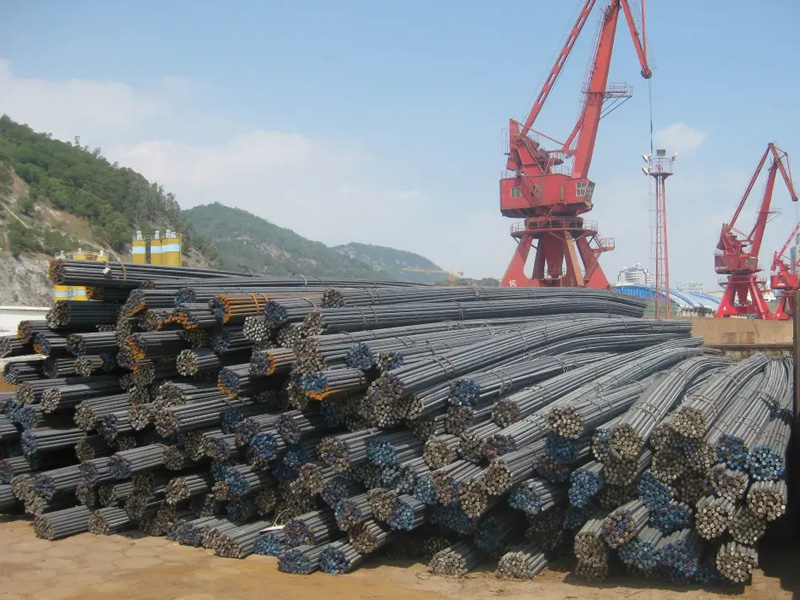
Recently, a batch of national standard high-quality construction rebar weighing 1,000 tons successfully arrived at the port of Morocco, completed ocean transportation, customs clearance, and was officially delivered to overseas customers. This batch delivery is an important achievement for domestic steel companies this year to deeply explore the infrastructure market in North Africa and expand overseas business along the “One Belt and One Road”. It further consolidates the market reputation and share advantages of domestic construction steel in the North African region.
According to foreign trade delivery data, the 1,000 tons of rebar exported to Morocco all adopt national high-quality production standards and strictly conform to local construction engineering construction specifications in North Africa. Multiple special tests such as metallographic structure, tensile strength, yield strength, and corrosion resistance have been completed throughout the process. The product's dimensional accuracy, mechanical properties, and surface quality all meet international export grade standards, and can fully adapt to the construction needs of various infrastructure projects such as civil residences, municipal roads, and basic pipe networks in Morocco. The entire batch of goods, from production scheduling, quality inspection, loading, shipping to port delivery, is under closed-loop control throughout the entire process to efficiently complete contract performance and delivery, fully demonstrating the mature production system and stable cross-border delivery capabilities of domestic steel companies.
As the core building materials consumer market in North Africa, Morocco's steel demand continues to maintain steady growth. Driven by major projects such as supporting infrastructure for the 2030 World Cup, nationwide urbanization upgrades, and affordable housing construction, the local building materials market continues to expand. Morocco's total steel consumption is expected to increase by 7%-8% year-on-year in 2026, approaching a high of 2.8 million tons. The rigid demand for construction steel is very strong. At the same time, the Moroccan government continues to increase investment in public infrastructure and promotes the construction of high-speed railways, highways, new cities and the renovation of old urban areas. There is a housing construction gap of hundreds of thousands of units every year, which continues to release a large amount of demand for the procurement of construction steel materials such as rebars and profiles.
In terms of market structure, China has long been the core source of steel imports in Morocco. With its advantages of excellent product quality, high cost performance and stable delivery, China accounts for nearly half of the local steel import market share. Compared with competing products from Europe and Türkiye, domestic rebar has strong adaptability and outstanding cost performance, and is highly suitable for Morocco's needs for materials for mid- to low-end infrastructure and livelihood projects. At the same time, against the background of many countries setting up trade barriers for steel products, the North African Moroccan market has a relatively loose trade environment and high cooperation stability, making it a high-quality core track for domestic steel companies to hedge against domestic off-season prices, divert inventory, and expand exports.
Since the beginning of this year, the domestic steel industry has continued to promote the optimization of foreign trade structure. While consolidating the Middle East market, it has focused on emerging potential markets such as North Africa and West Africa, using high-quality building materials and engineering materials as breakthrough points to continue to expand overseas market layout. The smooth delivery of 1,000 tons of rebar to Morocco is not only a pragmatic result of the company's precise grasp of the rigid demand dividends in North Africa and deep exploration of overseas market segments, but also an intuitive reflection of the transformation of domestic steel exports from "scale output" to "quality output". It effectively alleviates the pressure on production and sales of domestic construction steel in the off-season and achieves two-way complementarity in the domestic and foreign trade markets.
Analysts from industry organizations believe that with the continued implementation of a series of major infrastructure projects in Morocco and the steady advancement of urbanization, local demand for construction steel will continue to remain high in the next 2-3 years. In the future, domestic steel companies will continue to focus on emerging markets in North Africa, continue to optimize the quality and compliance system of export products, adapt to local engineering construction standards, continue to deepen China-Africa steel economic and trade cooperation, further expand the overseas market territory along the "Belt and Road", and promote the continued and steady growth of steel foreign trade business.


Room 504-1, Unit 1, Building 7, No.61 Gongye South Rd, Shunhua Rd Sub-district, High-tech Zone, Jinan, Shandong, China
Technical Support:Blue Ocean Cross-Border

Shandong Yonggang Metal Co., Ltd.
Our Products
Room 504-1, Unit 1, Building 7, No.61 Gongye South Rd, Shunhua Rd Sub-district, High-tech Zone, Jinan, Shandong, China
Technical Support:Blue Ocean Cross-Border